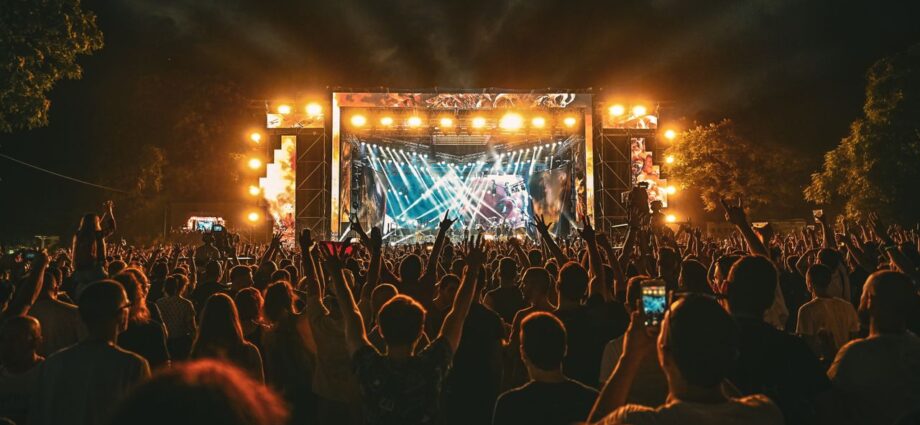
The global music festival market was valued at approximately $29 billion in 2024. That number would have seemed absurd to the organizers of the first Newport Folk Festival in 1959, or even to the promoters of Woodstock a decade later — events that operated on improvisation, goodwill, and a fundamental belief that music should bring people together outside the structures of commercial entertainment. The journey from those origins to a market projected to reach $54 billion by 2033 is a story about how culture becomes industry, and what gets preserved and what gets lost along the way.
The Counterculture Roots
The modern music festival has its origins in the 1960s and early 1970s, when outdoor gatherings became vehicles for social and political expression as much as musical ones. Woodstock in 1969 — which drew an estimated 400,000 people to a farm in upstate New York despite catastrophic logistical failures — became a defining cultural moment not because it was well run, but because it captured something that had no commercial equivalent at the time.
The Isle of Wight Festival in England drew similarly large crowds in the same period, and Glastonbury — which began in 1970 the day after Jimi Hendrix died — charged £1 for entry and included free milk from the farm where it was held. These were not businesses in any meaningful sense. They were experiments.
What turned them into businesses was the discovery that audiences would return, that sponsors would pay to be associated with the energy, and that the festival format — multi-day, multi-artist, on a dedicated site — created a level of audience engagement that no individual concert could match.
The Infrastructure Builds
Through the 1980s and 1990s, festival infrastructure professionalized rapidly. Sound systems, staging, ticketing, safety planning, and site management all became specialist industries in their own right. Glastonbury grew from a gathering of a few thousand into a five-day event for 200,000 people. Lollapalooza, launched in 1991 as a travelling festival, moved to a permanent Chicago home and became a template for the urban festival format.
The emergence of Electronic Dance Music as a mainstream genre created an entirely new category of festival, centred on DJ culture and production spectacle rather than band performance. Tomorrowland in Belgium — which began in 2005 and now draws around 400,000 attendees across multiple weekends — represents the pinnacle of this tradition, with production values that rival theatrical installations and a global livestream audience that extends its reach far beyond the physical site. Global recorded music revenues hit $29.6 billion in 2024, with paid subscribers rising to 752 million — a broader music economy expanding in parallel with the live sector, and feeding audience attachment to artists that drives festival demand.
What the Money Actually Looks Like
The financial structure of a modern music festival is considerably more complex than a ticket price multiplied by attendance.
Revenue streams now include:
- Ticket sales — still the primary source, typically accounting for around 50% of revenue
- Sponsorship — brand partnerships, named stages, experiential marketing activations, now representing roughly 35% of the market
- Merchandising — festival-branded and artist merchandise, which grew at a CAGR of 22% in 2024
- Food and beverage — concession revenue that can significantly exceed what organisers earn from ticket sales at some events
- Digital extensions — livestreaming, VR access passes, exclusive online content; around 33% of attendees now purchase some form of virtual access
The growth of digital revenue streams has pushed festival organisers to think more carefully about platform conditions, pricing transparency, and how audiences in different markets access content. This kind of comparative thinking about digital entertainment structures is something audiences bring from other areas of online leisure — including platforms reviewed on resources like https://beste-casinos-ohne-oasis.de/, which analyses how digital entertainment markets present their conditions to German-speaking users.
Live Nation reported global attendance up 14% to 44 million fans in a single quarter of 2025, alongside over 130 million tickets sold and $7 billion in quarterly revenue — figures that illustrate how dominant the live entertainment sector has become as a business.
The corporate consolidation that has followed this growth has been substantial. In 2024, a private equity firm acquired a pan-European festival operator running more than 80 events across 10 countries, serving approximately 7 million annual attendees. The logic is the same as any media or entertainment rollup: shared infrastructure, combined negotiating leverage with artists and sponsors, and data accumulated across millions of attendees.
The Geography of Growth
Europe remains the largest regional market, valued at around $9.5 billion in 2024 — a reflection of the continent’s deep festival culture, from Glastonbury and Reading in the UK to Primavera Sound in Barcelona, Roskilde in Denmark, and the cluster of major electronic events in Germany and the Netherlands. According to the IFPI Global Music Report, streaming and live music growth are closely linked — audiences who engage most with recorded music are also the most active festival attendees.
North America follows closely, with Coachella, Bonnaroo, SXSW, and Lollapalooza anchoring a market worth around $8.9 billion. The US accounts for more than 60% of North America’s festival revenue, driven by large-scale destination events that attract international attendance and premium sponsorship.
The fastest-growing region is Asia Pacific, with a market valued at $5.2 billion in 2024 and a projected CAGR of 9.1% through the early 2030s. Rising disposable incomes, urbanisation, and the global reach of K-pop and regional electronic genres are all driving growth in markets that had minimal festival infrastructure a decade ago.
The Tension Between Scale and Experience
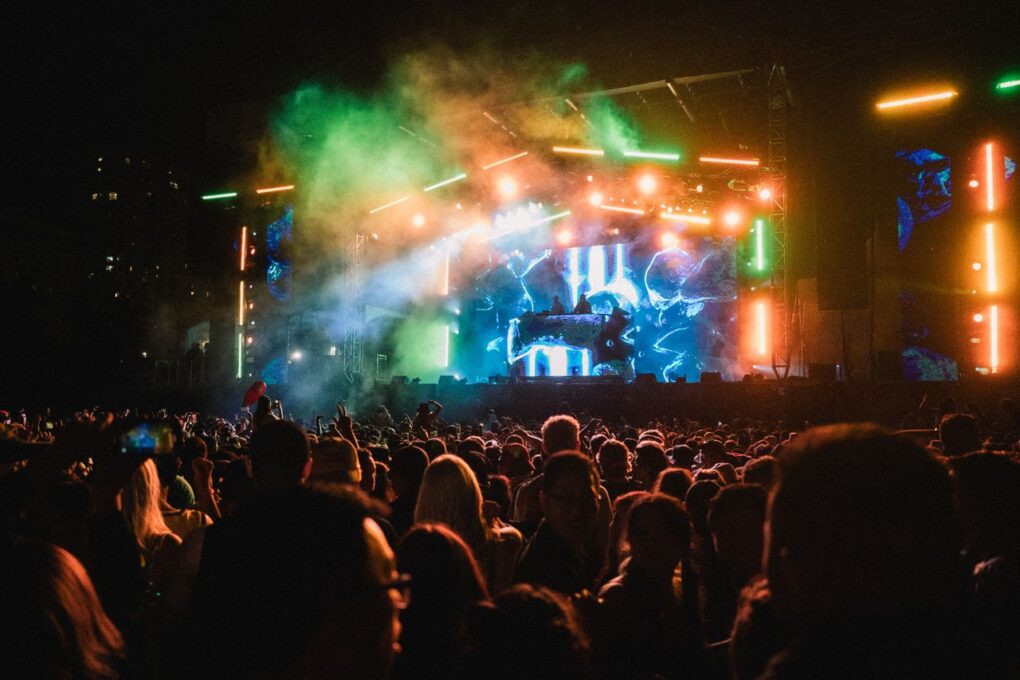
The transformation of festivals into a global industry has not been without friction. Ticket prices have risen substantially — Coachella’s general admission reached $599 in 2025, up from $269 in 2014. Artist fees at the top end have grown to match, creating a concentration of bookings around a smaller number of headline acts who command the premium that sponsors and broadcasters need.
A 2024 survey found that 44% of festivalgoers express concerns about repetitive lineups, while 31% have reduced attendance due to high ticket costs. These are the predictable pressures of any industry that scales quickly: standardisation crowds out the surprise and discovery that made the format compelling in the first place.
The response from the most interesting operators has been to lean into specificity — niche genre festivals, destination events tied to particular places, community-focused formats that prioritise curation over size. These sit alongside the mega-events rather than replacing them, serving audiences for whom the festival experience is still fundamentally about the music rather than the spectacle around it.
Where the Format Goes Next
The clearest emerging trend is hybridisation. Around 58% of festivals introduced some form of hybrid physical-digital access in 2024, and the investment in VR and livestreaming infrastructure suggests that the audience for a festival is no longer defined by who can physically attend.
This creates genuinely new economic territory. A festival that sells 100,000 physical tickets but reaches a global livestream audience of 2 million is operating in a fundamentally different business than one that existed only for its on-site attendees. How the economics of that model distribute between artists, organisers, and platforms is still being worked out.
What seems unlikely to change is the underlying appeal: the combination of shared physical space, live performance, and community that has driven festival attendance since 1959. Industries can be built around that appeal, and have been. But the appeal itself — the reason someone drives four hours to stand in a field — precedes the industry by a considerable margin, and will likely outlast whatever business model eventually settles around it.